
Resilient community capacity, resilient event futures, Safer futures
Resilient and safe festival experience through stakeholder conversation

‘Exploring safety at Mass Gathering Events through the lens of three different stakeholders’ in Frontiers in Public Health (12)
This project is larger in scope. It involves Professor Alison Hutton from Western Sydney University. Alison is a founding member of the World Health Organization Collaboration Centre for Mass Gatherings and Global Health Security. The project also involves Associate Professor Jamie Ranse. He leads the Griffith University Disaster Resilience Futures Hub. He also founded the Mass Gathering Foundation (Griffith University).
As we state early on, safety has become increasingly significant. It is now crucial to researchers, managers, funding agencies, and public bodies, i.e., all involved in the provision of mass gathering events. This paper arrives at a time of acute need. We need appropriate application of psychosocial understanding and biophysical knowledge for safe management of the social environment of MGE. It is also needed for the broader community. The magic word is ‘trust’.
m.robertson@resilienteventfutures.org
event resilience; audience; stakeholders; community capacity; trust
Resilience to environmental changes
In my commentary to an Australia audience – https://lnkd.in/eFm7svHk, I remained upbeat about the Edinburgh Hogmanay when asked about an impending ‘dark’ weather front. But that’s because I didn’t have a good answer to share. Edinburgh will now need work to ensure it does. Resilience is key!
https://lnkd.in/eVHg_6Ek hashtag#futurethinking hashtag#hogmanay hashtag#eventresilience
resilience
Coproducing festivals
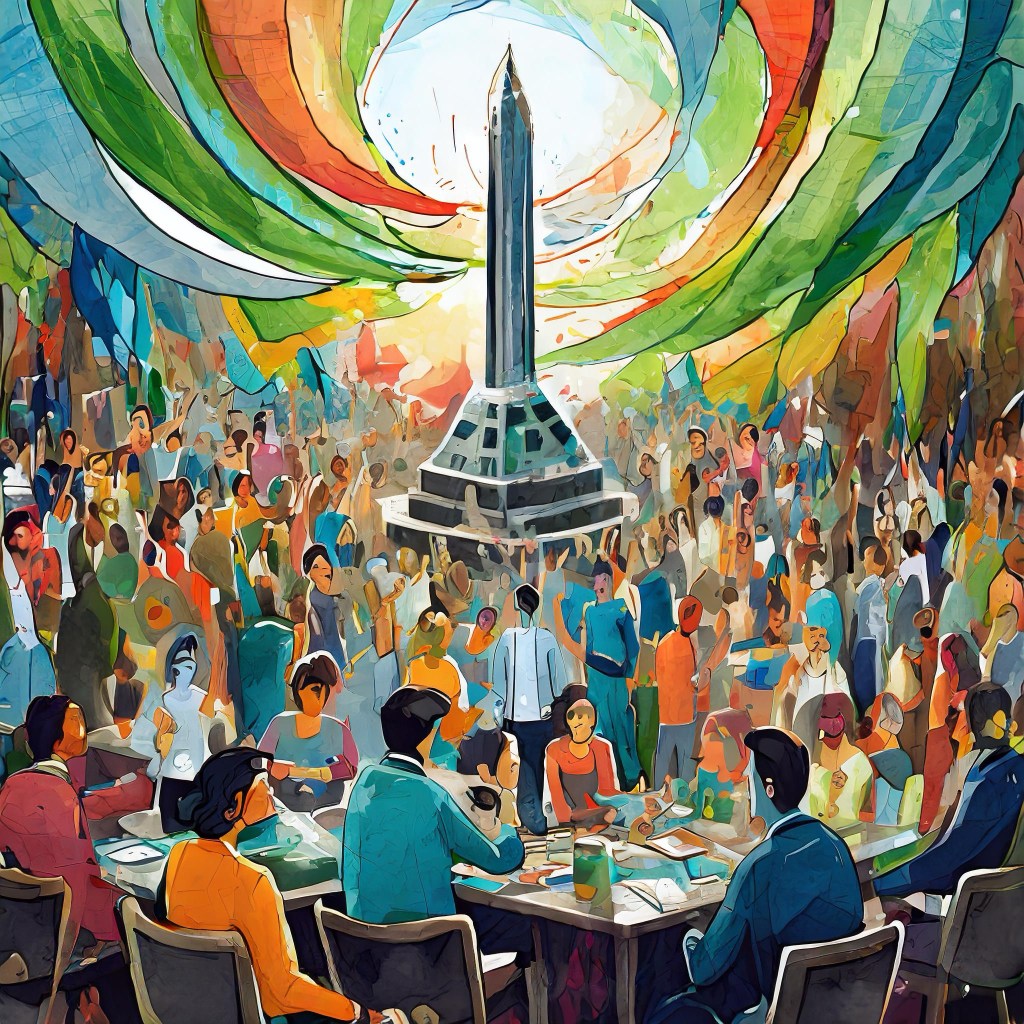
Festival and cultural activity as contribution to – and conduits of – spatial planning for community resilience and adaptive capacity
Robertson (2016, p21) “spatial planning has become increasingly connected to the idea of urban resilience, i.e. planning to ensure a city is able to respond and recover from unexpected change. While the concept of urban resilience can be seen to have its roots in ecological systems research, i.e.
the notion of how to make the ecological environment resilient and adaptable to change, it
has grown to include social and economic systems (Desouza & Flanery, 2013; Jabareen,
2013) of which festivals and events are elements.
Accordingly there is agreement in the literature looking at urban resilience that a holistic approach to city design, planning and managing for resilience must not only look at the physical environment but also evaluate and interact with cultural and process dynamics (Desouza & Flanery, 2013). Common through the discussion in looking at urban resilience is a focus on the involvement of communities, i.e. as active citizens. Cultural and sport activity are important components of interaction to facilitate the building and belief in citizenship.”
Further, referring to Widerhold (2013) Robertson (2016, p21) reflects “on the potential of local arts festivals in cities to be learning demonstrations of civic engagement. This importance is not restricted to cities. Community festivals can also be important focus to establish and grow rural community resilience (Derret, 2009). Gibson and Connell (2015) offer an excellent example of how community
festivals and events in a time of extreme droughts and environmental hardship helped the
community of rural Australia to adapt and become resilient to change, and to increase bonds
of citizenship.”
A body of work by Robertson, Hutton & Brown explores the theoretical objectives and conclusions of festival leadership in the context of outdoor music festivals. They discuss the importance of place and event sustainability and propose future models of festival leadership that support these objectives.
One key concept that emerges from their work is the idea of a more holistic construct of civic responsibility. They argue that in order to achieve sustainability in festivals, a shift is needed. This shift should lead to a broader understanding of civic responsibility. This understanding encompasses not only the festival organizers but also the attendees, local communities, and other stakeholders. This holistic approach acknowledges responsibility for sustainability extends beyond the event itself. It requires active engagement from all parties involved.
The authors suggest a shift towards a more holistic construct of civic responsibility. This will lead to a post-co-creative stage. It will also lead to a co-productive future for many critical mass meeting experiences. In other words, they propose that festivals will evolve from being solely co-creative endeavors. The focus is on collaboration between organizers and attendees. They suggest a shift to co-productive experiences that involve a wider range of actors and stakeholders.
This co-productive future requires a deeper level of engagement and collaboration. It involves festival organizers, local communities, government agencies, businesses, and attendees. It recognizes that festivals are not isolated events. They are integral parts of the social, cultural, and economic fabric of the communities in which they take place. By embracing a co-productive approach, festivals can leverage the collective knowledge of all stakeholders. They can access shared resources and inspire creativity. This enables them to foster sustainability, create meaningful experiences, and contribute to the overall well-being of the community.
In summary, the work by Robertson, Hutton, Brown, and their colleagues proposes that a more holistic construct of civic responsibility will emerge in the future of outdoor music festivals. This construct emphasises the importance of place and event sustainability and calls for a shift towards a co-productive approach that involves collaboration and engagement from a wide range of actors. By embracing this holistic and co-productive future, festivals can contribute to the development of sustainable and meaningful experiences for all participants.
co-produced; civil responsibility; resilient events and living places
Survival and sustainability of festivals….and forward in Edinburgh?
Not exactly a blog input but certainly pertinent in current situation. Professor Jane Ali-Knight, Edinburgh Napier University and ATLAS welcome you to an online panel discussion with Edinburgh’s Festivals, join us to hear Nick, Julia and Oliver give an insight into how they are ensuring the survival and sustainability of each of their individual organisations, as well as remotely maintain their relationships with the city, its communities, and their virtual audiences. The panel will focus on:
How the festivals of 2020 have been affected
Future implications of the Covid-19 pandemic, and their responses to it Lessons learnt by Edinburgh’s festival sector.
https://lnkd.in/e-d4xXM
Resilience forward – events, space, place and communities
While the concept of urban resilience can be seen to have its roots in ecological systems research, i.e. the notion of how to make the ecological environment resilient and adaptable to change, it has grown to include social and economic systems of which organised events are significant elements. Common through the discussion in looking at urban resilience is a focus on the involvement of communities, i.e. as active citizens. Learning, cultural and sport activity are important components of interaction to facilitate the building and belief in citizenship. Wiederhold (2013) reflects on the potential of local arts festivals in cities to be learning demonstrations of civic engagement. More recently, other forms or organised information sharing communities and structured social gathering (face-to-face and online) are also accepted as accomplished actions of civic engagement (Robertson, 2016, 2020).
This blog is a response to understanding and sustaining socio-cultural development and emotional experience through existing and new event form in the existing urbanised, urbanising and de-urbanising world in which people live (or are moving from/to) and to which people visit. I will be contributing to this on an ongoing basis. Some of this discussion has emerged out of the 6 years of research that formed my (successful) PhD submission in 2016, ‘Sustainable festivals and events – an inquiry of leadership and futures’. But the work has continued, utilising multi-disciplinary primary and secondary resources. I look forward to contributing to this area of research, discussion and resolution. All communications on subject(s) are welcome.
Associate Professor Martin Robertson, Business School, Edinburgh Napier University, UK*
& Adjunct Associate Professor, Victoria University, Melbourne, Australia*
*please note that my dialogue here should not be read as representing those of my employer or any other organisation that I represent in a professional capacity
Good company in a journey makes the way seem shorter. — Izaak Walton

 Resilienteventfutures